
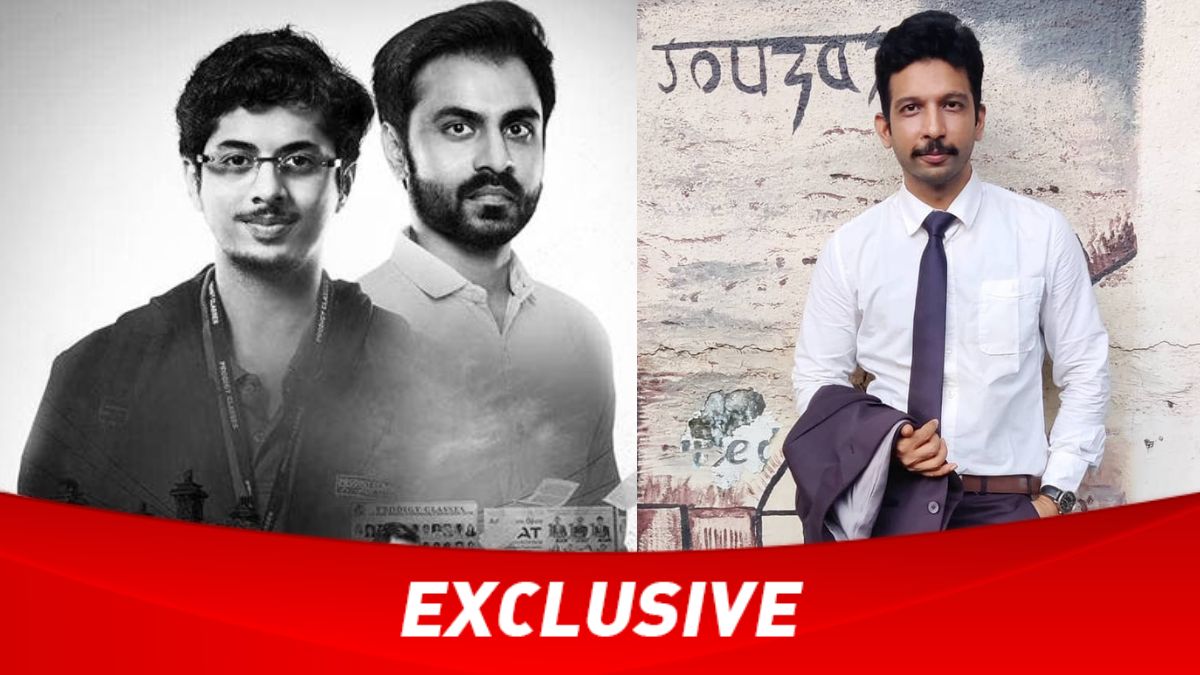
Creator Sandeep Jain is known for his compelling storytelling and strong narratives and has made a mark in the world of Indian web series with critically acclaimed projects like Tabbar, Kota Factory, and Kanneda. He has voiced concern over the growing lack of original content in Hindi cinema. He feels that actors and producers don’t want to take the risk of original projects and are more focused on franchises. Highlighting the industry’s preference for formulaic storytelling, he made shocking revelations on some of his own ‘original’ projects in which he worked as a co-writer.
In an exclusive conversation with Bollywood Bubble, Sandeep revealed that it was tough to get Kota Factory sanctioned and also talked about how he has been focused on creating original content with Tabbar and Criminal Justice Season 4. The ace writer also sheds light on how OTT platforms face backlash and regulatory pressure and also gave his advice to aspiring screenwriters. Excerpts:
Many critics argue that Bollywood is stuck in a loop of remakes, biopics, and formulaic content. As a screenwriter, do you think creativity has been sacrificed for commercial safety?
Creatively, I completely agree—there is less space for original content. Every actor has a fixed annual slate. An actor can only do two or three projects a year. So, when producers plan their slates—be it OTT or theatrical—if all their energy goes into safe content like remakes or adaptations, then automatically, there’s no room left for original scripts. If an actor’s dates are already given to franchise films, original content automatically takes a backseat. Right now, we are in a phase where franchises are being cashed in on because nothing else seems to be working. Producers don’t want to take risks anymore, so they stick to what has worked in the past. Actors, too, don’t want to take risks and are focused on franchises. It requires a lot of hard work and reiterations. If you start developing four stories, maybe only two will go in the right direction. It’s risky. On the other hand, remakes save you that hard work—you already have a framework. So yes, producers are currently more inclined toward remakes, and I believe this trend will continue despite our concerns.
So yes, I am genuinely concerned about the lack of original content coming from the Hindi film industry. But at the same time, I think OTT platforms have given space to some genuine, original stories. If you take my own project Kota Factory Season 1, it was entirely original. If someone has tried making Kota Factory with the conventional producers, it would have been never made. It was TVF who trusted their gut feeling to create something completely original. It was black-and-white—a decision made by the director—and perhaps no one would’ve agreed to that. But it became a massive hit. It was driven entirely by instinct and gut feeling. Tabbar was also an original story. In the Criminal Justice franchise, the first three seasons were adaptations. But this recent season was the first time we created an original story for it. Initially, there was fear—because it was the franchise’s first original storyline. We didn’t know how the audience would respond. But it turned out well.
OTT platforms promised fresh, bold storytelling—but now face similar issues of censorship and safe content. Do you think the so-called ‘freedom’ of digital storytelling is already being compromised?
Yes, digital storytelling on OTT platforms is increasingly compromised. What began as a space for bold narratives is now constrained by backlash and regulatory pressure. S\&P (Standards & Practices) teams often intervene at the script stage, prompting self-censorship even before writing is complete. Writers are forced to dilute impactful stories out of fear of non-clearance or controversy. While societal sensitivities matter, the solution lies in collaboration—not restriction. S\&P teams should guide creators with constructive input, allowing powerful stories to be told responsibly, without losing their core intent.
What advice would you give to aspiring screenwriters who want to create stories that are both commercially viable and critically acclaimed, like many of your projects?
My advice to aspiring screenwriters would be not to chase a story with the mindset of making it either commercially successful or critically acclaimed. That’s the wrong approach. I’ve never started writing with these two goals in mind because it’s extremely difficult to construct a good story while calculating how it will be received. Instead, pursue a story that surprises you, that stays with you, that moves you emotionally or even scares you. Let the story do something to you internally—shock you, haunt you, inspire you. If it does that to you, it’s worth writing. Creating from that place of honesty and personal connection is much more important than strategizing for commercial or critical success at the beginning.
Also Read: EXCLUSIVE: Shaitaan Star R Madhavan To Be A Part Of Kajol’s Supernatural Thriller Maa

Manisha has established a reputation for insightful and engaging storytelling with over six years of expertise in the industry. With a deep passion for cinema, she brings a unique perspective to her coverage, making it a trusted voice in the entertainment world.
Related Posts

EXCLUSIVE: Prince Narula Calls Out Mr Faisu’s Game In The 50, Claims The Latter Made WRONG Alliance; Says, “Rajat Apne Aap Ko Bachane Ke Liye Ise Khaa Jata”

EXCLUSIVE: Prince Narula Reveals Wanting To Participate In Bigg Boss With THESE Actors; Suggests Makers, “Ek Season Hona Chahiye Saare Winners Ke Saath”

EXCLUSIVE: Prince Narula Reveals He Never Calls Paps To Pose Amid Jaya Bachchan’s ‘Gande Pants’ Remark; Says, “Apni Apni Soch Hoti Hai”

EXCLUSIVE: Prince Narula Alleges The 50 Makers Of Using His And Elvish Yadav’s Unprofessional Roadies Controversy To Gain TRP; Says, “Show Ko Laga Ki Isse Thoda Masala Mil Jaayega”
Recent Post
- Kritika Kamra- Gaurav Kapur Reception: Malaika Arora, Vidya Balan, Richa Chadda And Many Celebs Attend The Newlyweds’ Star-Studded Celebration

- Ramesh Taurani Diwali Party 2025: Hrithik Roshan-Saba Azad, Riteish-Genelia Deshmukh, Sonakshi Sinha-Zaheer Iqbal And Other Bollywood Celebs Glam Up Ahead Of Festivities

- Manish Malhotra Diwali Party 2025: Nita Ambani, Radhika Merchant, Kareena Kapoor, Karan Johar And Other Bollywood Celebs Dazzle In Their Festive Finest

- The Ba***ds Of Bollywood Screening: Ranbir Kapoor-Alia Bhatt, Vicky Kaushal, Ambanis And Many More Celebs Step Out In Style To Support Aryan Khan’s Directorial Debut

- Son Of Sardaar 2 Screening: Mrunal Thakur, Ravi Kishan, Kubbra Sait, And Other Bollywood Celebs Attend Ajay Devgn’s Comedy Drama Premiere

- Metro…In Dino Screening: Aditya Roy Kapur, Sara Ali Khan, Anupam Kher, Neena Gupta And Other Bollywood Celebs Attend Anurag Basu’s Romantic Drama Premiere
- Naagin 6 Fame Simba Nagpal’s THESE Photos Prove He’s The Ultimate Adventure Junkie

- Met Gala 2025 Worst Dressed: ‘Basic’ Hailey Bieber To ‘Barbie’ Shakira And ‘Witchy’ Sadie Sink, 12 Celebs Who Pissed The Fashion Police

- Met Gala 2025 Best Dressed: Pregnant Rihanna To Princey Diljit Dosanjh And Mesmerizing Jodie Turner-Smith, 12 Celebs Who Wowed Us With Their Fashion

- Phule Special Screening: Javed Akhtar, Rajkummar Rao, Huma Qureshi And Other Celebs Arrive To Support Pratik Gandhi, Patralekhaa-Led Biopic

Read More


Follow us
© 2026. All rights are reserved with DeepDive Digital Pvt Ltd