
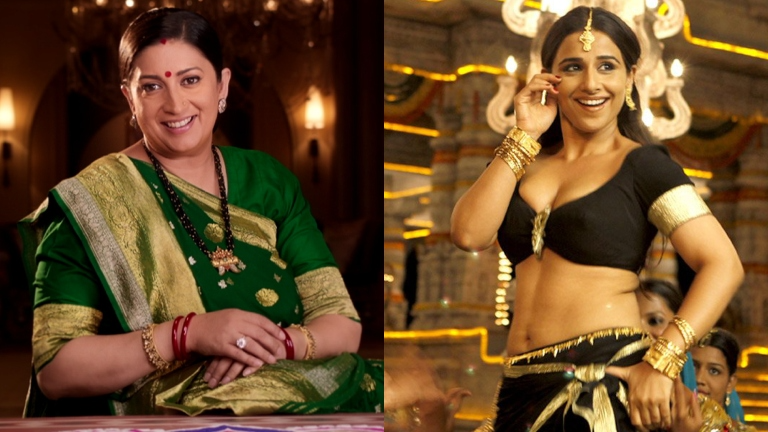
Ektaa R Kapoor has spent three decades shaping not just Indian television but also the larger grammar of popular culture. As she marks 30 years in the industry, celebrates her first National Award, and prepares to launch Naagin 7, her greatest legacy lies in the women she created. From Tulsi Virani to Silk Smita, her female leads have reflected the evolving image of Indian womanhood, moral anchors, glamorous rebels, supernatural warriors, and unapologetic icons.
5 Ektaa R Kapoor’s Most Iconic Female Leads
Tulsi Virani (Kyunki Saas Bhi Kabhi Bahu Thi)
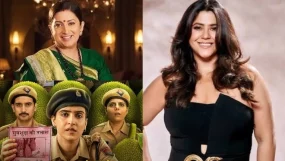
At the turn of the millennium, Tulsi Virani (Smriti Irani) became the face of Indian television. More than a daughter-in-law, she was the moral anchor of an entire household and, by extension, the audience. Tulsi’s resilience and sense of duty mirrored the early 2000s’ ideal of the self-sacrificing yet strong Indian woman.
Parvati Agarwal (Kahaani Ghar Ghar Kii)
If Tulsi was the dutiful daughter-in-law, Parvati Agarwal (Sakshi Tanwar) became the quintessential matriarch. Through family upheavals, betrayals, and generational shifts, Parvati remained a figure of strength and authority. She represented the idea of the modern matriarch, protective yet progressive, and captured the struggles of women balancing tradition with changing family dynamics.
Komolika (Kasautii Zindagii Kay)
If Tulsi stood for tradition, Komolika (Urvashi Dholakia) stood for disruption. With her kohl-lined eyes, dramatic background score, and unapologetic ambition, Komolika became one of television’s most recognisable villains. She proved that female antagonists could be just as compelling and celebrated as protagonists.
The Naagin (Naagin Franchise)
With Naagin, Kapoor pushed her storytelling into the fantasy genre. From Mouni Roy to Tejasswi Prakash, the Naagin protagonists were avengers and protectors, women who fought their own battles while commanding massive ratings. In a changing television landscape, the success of Naagin reinforced that female-led fantasy remains one of India’s most bankable genres.
Silk Smita (The Dirty Picture)
Kapoor’s experiments were not limited to television. With The Dirty Picture (2011), Vidya Balan’s portrayal of Silk Smita broke new ground. Bold, sensual, and vulnerable, Silk was unapologetically real and far removed from the ideals of the traditional heroine. The film not only cemented Kapoor’s reputation as a producer who could back unconventional stories but also won her leading lady, Vidya Balan, a National Award.
Across television and cinema, Ekta Kapoor’s women are not passive figures. They drive narratives, challenge stereotypes, and remain etched in public memory. Tulsi, Komolika, Naagin, and Silk represent different eras and different shades of Indian womanhood, from moral compass to unapologetic icon.
For more news and updates from the entertainment world, stay tuned to Bollywood Bubble.
Also Read: Gangubai Kathiawadi, Serious Men To Bastar, 5 Times Indira Tiwari Shined Through Her Characters In Parallel Cinema

Akankshya Mukherjee is a dynamic and ambitious individual poised to make waves in the realm of Media and Communication. With a passion for creativity and a drive to contribute to forward-thinking organizations, Akankshya embodies adaptability and a hunger for learning. Having already garnered experience through involvement in various organizations, she has honed the skill of quickly adapting to new environments and challenges. She sees each opportunity as a chance for personal and professional growth, eagerly embracing roles in communications and content writing.
Related Posts
Gudi Padwa 2026: Shraddha Kapoor, Madhuri Dixit, Riteish-Genelia Deshmukh And Other Celebs Extend Heartfelt Festive Wishes
Faraaz, Subedaar To Daldal, Here Are The Many Shades Of Aditya Rawal Paving Stardom
International Women’s Day 2026: Radhikka Madan, Alia Bhatt To Nitanshi Goel, Bollywood Actresses Who Inspired Through Powerful Roles
Holi 2026: Rang Barse Bheege Chunarwali, Balam Pichkari To Badrinath Ki Dulhaniya, Panwadi, Must Play Bollywood Songs This Festive Season
Recent Post
- Kritika Kamra- Gaurav Kapur Reception: Malaika Arora, Vidya Balan, Richa Chadda And Many Celebs Attend The Newlyweds’ Star-Studded Celebration
- Ramesh Taurani Diwali Party 2025: Hrithik Roshan-Saba Azad, Riteish-Genelia Deshmukh, Sonakshi Sinha-Zaheer Iqbal And Other Bollywood Celebs Glam Up Ahead Of Festivities
- Manish Malhotra Diwali Party 2025: Nita Ambani, Radhika Merchant, Kareena Kapoor, Karan Johar And Other Bollywood Celebs Dazzle In Their Festive Finest
- The Ba***ds Of Bollywood Screening: Ranbir Kapoor-Alia Bhatt, Vicky Kaushal, Ambanis And Many More Celebs Step Out In Style To Support Aryan Khan’s Directorial Debut

- Son Of Sardaar 2 Screening: Mrunal Thakur, Ravi Kishan, Kubbra Sait, And Other Bollywood Celebs Attend Ajay Devgn’s Comedy Drama Premiere
- Metro…In Dino Screening: Aditya Roy Kapur, Sara Ali Khan, Anupam Kher, Neena Gupta And Other Bollywood Celebs Attend Anurag Basu’s Romantic Drama Premiere
- Naagin 6 Fame Simba Nagpal’s THESE Photos Prove He’s The Ultimate Adventure Junkie

- Met Gala 2025 Worst Dressed: ‘Basic’ Hailey Bieber To ‘Barbie’ Shakira And ‘Witchy’ Sadie Sink, 12 Celebs Who Pissed The Fashion Police

- Met Gala 2025 Best Dressed: Pregnant Rihanna To Princey Diljit Dosanjh And Mesmerizing Jodie Turner-Smith, 12 Celebs Who Wowed Us With Their Fashion
- Phule Special Screening: Javed Akhtar, Rajkummar Rao, Huma Qureshi And Other Celebs Arrive To Support Pratik Gandhi, Patralekhaa-Led Biopic





Read More
Follow us
© 2026. All rights are reserved with DeepDive Digital Pvt Ltd