

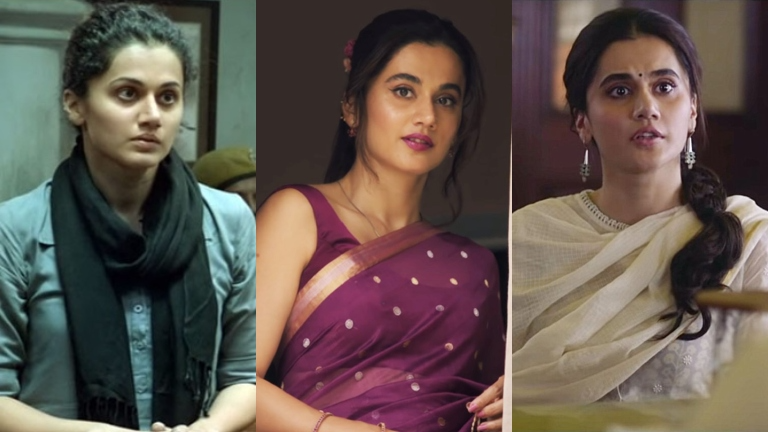
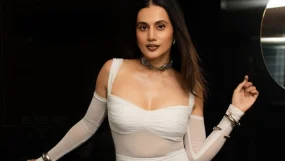
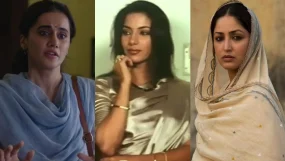
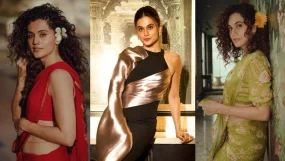
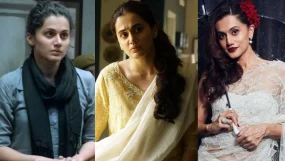
Taapsee Pannu has built a filmography that doesn’t just tell stories, it protests. With every role, she dismantles the invisible rules that govern how women are expected to behave, love, sacrifice, and stay silent. Her films speak for the woman who is conditioned to adjust, to tolerate, and to never question. And through her characters, Taapsee keeps turning that silence into confrontation. Here are five performances that didn’t just entertain, they challenged the status quo.
7 Times Taapsee Pannu Fought Silent Patriarchy In Bollywood
Thappad, Amrita Sabharwal: Rejecting the culture of “adjustment”
As Amrita, Taapsee delivers one of the most powerful on-screen answers to domestic conditioning. She refuses to justify violence, even if it happened “just once.” Her walkout becomes a statement against a society that expects women to compromise for peace.
Pink, Minal Arora: The role that made “No Means No” a cultural line
In Pink, Minal isn’t just a character, she’s a movement. Taapsee portrays every woman silenced by judgment, defending her dignity against moral policing and victim-blaming. She gave Indian cinema one of its loudest feminist moments.
Saand Ki Aankh, Prakashi Tomar: Breaking patriarchy with precision
As sharpshooter Prakashi Tomar, Taapsee takes on rural patriarchy head-on. The film redefines capability; age and gender don’t limit ambition. Her character becomes a symbol of women claiming space where they were never allowed to exist.
Haseen Dillruba, Rani Kashyap: When desire becomes an act of rebellion
Taapsee’s Rani isn’t afraid to own her choices or her desires. The film flips the script on how society judges women who refuse to apologise for their wants. Rani challenges the idea that a woman’s sexuality makes her guilty.
Rashmi Rocket, Rashmi Vira: Calling out institutional patriarchy
As Rashmi, Taapsee becomes the voice against gender policing in sports. Her fight against humiliating verification tests exposes how systems control women’s bodies and identities. The film shifts the conversation from individual battles to systemic injustice.
Badla, Naina Sethi: Flipping the narrative of guilt
In Badla, Taapsee plays a woman who refuses to be cornered into the role society expects; a guilty woman must be ashamed, afraid, or apologetic. Naina demands power in the conversation and forces us to question why women are immediately doubted, judged, or villainised.
Baby, Shabana Khan: A woman who doesn’t need permission to be fearless
As intelligence officer Shabana Khan, Taapsee steps into a space stereotypically built for men, action, strategy, and power. She shatters the idea that women in cinema must be protected or emotional. Shabana is skilled, authoritative, and central to the mission; no saving required.
For more news and updates from the entertainment world, stay tuned to Bollywood Bubble.
Also Read: Rani Mukerji, Karishma Tanna To Shefali Shah, 5 Actresses Who Stepped Into The Shoes Of Police Officers Creating Their Cop Verses

Akankshya Mukherjee is a dynamic and ambitious individual poised to make waves in the realm of Media and Communication. With a passion for creativity and a drive to contribute to forward-thinking organizations, Akankshya embodies adaptability and a hunger for learning. Having already garnered experience through involvement in various organizations, she has honed the skill of quickly adapting to new environments and challenges. She sees each opportunity as a chance for personal and professional growth, eagerly embracing roles in communications and content writing.
Related Posts
Lohri 2026: Pulkit Samrat-Kriti Kharbanda, Maniesh Paul To Sidharth Malhotra-Kiara Advani, Bollywood Couples Who Celebrated The Festival With Joy And Tradition

Lohri 2026 Special: Diana Penty, Triptii Dimri To Pragya Jaisawal, 8 Bollywood Actresses To Take Cues From To Ace Your Fashion Game Today

Salman Khan, Ali Fazal, Ranveer Singh To Adivi Sesh, 8 Much-Awaited Action-Packed Performances Of 2026 That Will Keep You On The Edge Of Your Seats

Pragya Jaiswal Birthday Special: Western Or Ethnic, Her Fashion Is Always On-Point And These 10 Looks Prove It
Recent Post
- Ramesh Taurani Diwali Party 2025: Hrithik Roshan-Saba Azad, Riteish-Genelia Deshmukh, Sonakshi Sinha-Zaheer Iqbal And Other Bollywood Celebs Glam Up Ahead Of Festivities
- Manish Malhotra Diwali Party 2025: Nita Ambani, Radhika Merchant, Kareena Kapoor, Karan Johar And Other Bollywood Celebs Dazzle In Their Festive Finest

- The Ba***ds Of Bollywood Screening: Ranbir Kapoor-Alia Bhatt, Vicky Kaushal, Ambanis And Many More Celebs Step Out In Style To Support Aryan Khan’s Directorial Debut

- Son Of Sardaar 2 Screening: Mrunal Thakur, Ravi Kishan, Kubbra Sait, And Other Bollywood Celebs Attend Ajay Devgn’s Comedy Drama Premiere
- Metro…In Dino Screening: Aditya Roy Kapur, Sara Ali Khan, Anupam Kher, Neena Gupta And Other Bollywood Celebs Attend Anurag Basu’s Romantic Drama Premiere
- Naagin 6 Fame Simba Nagpal’s THESE Photos Prove He’s The Ultimate Adventure Junkie

- Met Gala 2025 Worst Dressed: ‘Basic’ Hailey Bieber To ‘Barbie’ Shakira And ‘Witchy’ Sadie Sink, 12 Celebs Who Pissed The Fashion Police

- Met Gala 2025 Best Dressed: Pregnant Rihanna To Princey Diljit Dosanjh And Mesmerizing Jodie Turner-Smith, 12 Celebs Who Wowed Us With Their Fashion
- Phule Special Screening: Javed Akhtar, Rajkummar Rao, Huma Qureshi And Other Celebs Arrive To Support Pratik Gandhi, Patralekhaa-Led Biopic
- Kesari Chapter 2 Special Screening: Twinkle Khanna, Kajol, Karan Johar And Other Celebs Step Out To Support Akshay Kumar, R Madhavan, Ananya Panday-Led Courtroom Drama




Read More
Follow us
© 2023. All rights are reserved with DeepDive Digital Pvt Ltd