
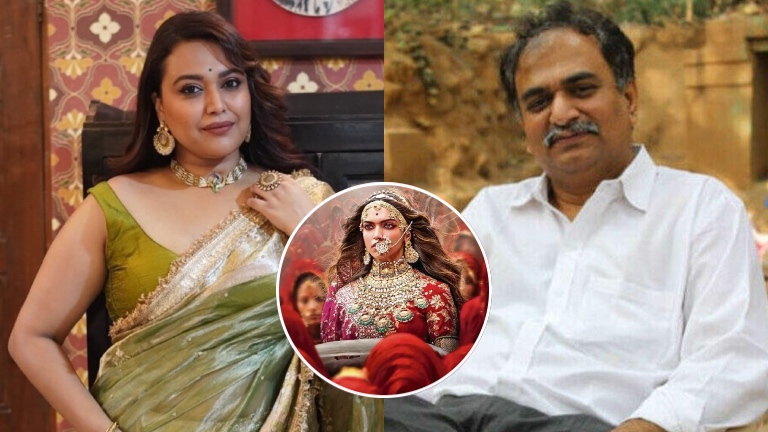
The debate surrounding the Jauhar sequence in Sanjay Leela Bhansali’s Padmaavat has resurfaced after Swara Bhasker questioned its depiction. Now, Prakash Kapadia, who co-wrote the period drama with Sanjay Leela Bhansali, has defended the filmmakers’ approach. Kapadia said the team based the film on their research and historical sources. He maintained that the controversial sequence reflected the circumstances of the period portrayed in the film. Scroll down to read the full article.
Padmaavat Writer Prakash Kapadia REACTS To Swara Bhasker’s Jauhar Remarks
“We made the film according to our research and what is written in history books,” Kapadia said while speaking to the Hindustan Times. The writer also stressed that viewers can interpret a film differently. However, he said the Jauhar sequence represented the harsh realities of that period.
“Every person interprets the film differently. What we showed, including the jauhar scene, was the reality of those times; it cannot be changed now. The situation was that of ‘do or die’. Woh log (the male warriors) kesariya kar ke utare thhe.”
Prakash Kapadia Defends Jauhar Scene
Kapadia’s comments come amid renewed criticism of the way Jauhar was presented in Padmaavat. Swara Bhasker had previously described the portrayal as problematic, sparking discussions about the film’s treatment of history. Kapadia said he had not been closely following Swara’s comments. He also suggested that audiences approach films with different expectations and attitudes.
He added, “It depends on the person’s mood; even if it’s a good film and you watch it with a bad state of mind, you will find it bekaar. It’s also about intention; whether you are going as a viewer, or watching it to find something controversial, or to find negativity… With Padmaavat, people had raised objections even before watching the film and had protested on the streets. The same conversation is continuing years later, so what can I say? Let people say what they want to.”
What Does Kesariya Mean?
Kapadia also referred to the practice of male warriors wearing saffron before entering battles they were unlikely to survive. This tradition is commonly associated with Rajput warfare and is known as Kesariya. The practice represented a final battle in circumstances where victory was considered impossible, with the men entering combat prepared to fight until death. The Jauhar sequence in Padmaavat was presented alongside this historical context. Kapadia argued that these elements were part of the reality the filmmakers were attempting to portray.
Padmaavat Controversy Before Release
Padmaavat was surrounded by controversy long before its theatrical release. Several groups raised objections to the film during its production and before audiences could watch the finished movie, while protests were held in different parts of the country.
The controversy centred on the film’s portrayal of Rajput history and its central characters. Despite the disputes, Padmaavat eventually released in 2018. The film starred Deepika Padukone as Rani Padmavati, Shahid Kapoor as Maharawal Ratan Singh and Ranveer Singh as Alauddin Khilji. It was inspired by Malik Muhammad Jayasi’s 16th-century epic poem Padmavat.
Prakash Kapadia’s Projects
Prakash Kapadia has worked extensively on films drawing from history and mythology. His writing credits include Sanjay Leela Bhansali’s Bajirao Mastani and Padmaavat. He was also associated with Tanhaji: The Unsung Warrior and Gangubai Kathiawadi.
Kapadia’s latest screenwriting project is the 2026 adventure drama Krishnavataram – Part 1: The Heart.
For more news and updates from the entertainment world, stay tuned to Bollywood Bubble.
Also Read: Swara Bhasker Clarifies Padmaavat Jauhar Scene Remarks; Says, ” Never Called Rani Padmavati Coward”

Akankshya Mukherjee is a dynamic and ambitious individual poised to make waves in the realm of Media and Communication. With a passion for creativity and a drive to contribute to forward-thinking organizations, Akankshya embodies adaptability and a hunger for learning. Having already garnered experience through involvement in various organizations, she has honed the skill of quickly adapting to new environments and challenges. She sees each opportunity as a chance for personal and professional growth, eagerly embracing roles in communications and content writing.
Related Posts

Rise And Fall 2: Kaira Anu Shares Priyanka Chahar Choudhary’s Heartwarming Message Post Eviction- Watch
Ajay Devgn, Kajol’s Juhu Bungalow Partly Demolished After BMC Notice; Actors’ Team REACTS
Honey Singh Questioned For 2 Hours By Maha Cyber Cell Over Alleged Objectionable Remark At Concert
Tum Mere Ho Title Track Review: Gurmeet Choudhary, Isha Malviya Bring Love, Heartbreak And Longing To Life As Faiz’s Soulful Vocals Adds Conviction
Recent Post
- Anshula Kapoor-Rohan Thakkar Wedding Reception: Boney, Anil, Sanjay, Arjun, Janhvi, Shanaya Kapoor And More Bollywood Celebs Arrive In Style

- Devil Wears Prada 2 Screening: Karan Johar, Rhea Chakraborty, Tamannaah Bhatia, Pratibha Ranta And Others Turn The Red Carpet Into A Fashion Extravagance
- Kritika Kamra- Gaurav Kapur Reception: Malaika Arora, Vidya Balan, Richa Chadda And Many Celebs Attend The Newlyweds’ Star-Studded Celebration
- Ramesh Taurani Diwali Party 2025: Hrithik Roshan-Saba Azad, Riteish-Genelia Deshmukh, Sonakshi Sinha-Zaheer Iqbal And Other Bollywood Celebs Glam Up Ahead Of Festivities
- Manish Malhotra Diwali Party 2025: Nita Ambani, Radhika Merchant, Kareena Kapoor, Karan Johar And Other Bollywood Celebs Dazzle In Their Festive Finest

- The Ba***ds Of Bollywood Screening: Ranbir Kapoor-Alia Bhatt, Vicky Kaushal, Ambanis And Many More Celebs Step Out In Style To Support Aryan Khan’s Directorial Debut

- Son Of Sardaar 2 Screening: Mrunal Thakur, Ravi Kishan, Kubbra Sait, And Other Bollywood Celebs Attend Ajay Devgn’s Comedy Drama Premiere
- Metro…In Dino Screening: Aditya Roy Kapur, Sara Ali Khan, Anupam Kher, Neena Gupta And Other Bollywood Celebs Attend Anurag Basu’s Romantic Drama Premiere
- Naagin 6 Fame Simba Nagpal’s THESE Photos Prove He’s The Ultimate Adventure Junkie

- Met Gala 2025 Worst Dressed: ‘Basic’ Hailey Bieber To ‘Barbie’ Shakira And ‘Witchy’ Sadie Sink, 12 Celebs Who Pissed The Fashion Police





Read More


Follow us
© 2026. All rights are reserved with DeepDive Digital Pvt Ltd