

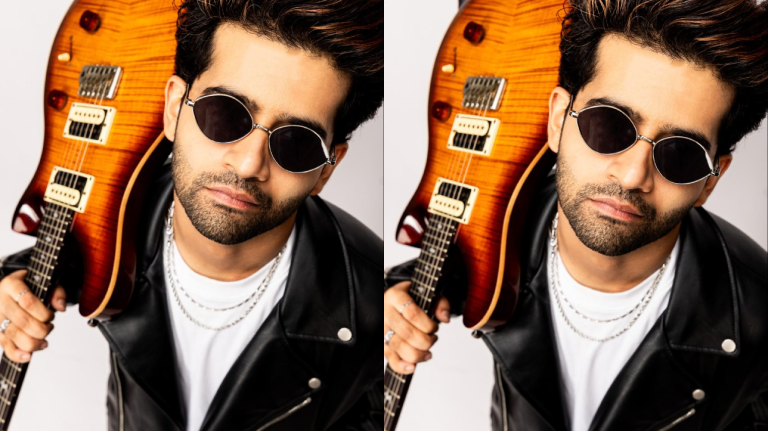
Take the last song that genuinely got under your skin, the one you replayed on a loop, danced to in several weddings, or sang in the shower without even realising. You probably know the singer’s name, and maybe even the composer’s, because they’re who get the spotlight and deservingly so. But there’s usually someone else in that story who crafts the song’s structure with a full-body surgery: they decide if the guitar should come a beat later than expected, they decide whether a flute and not a violin would carry the sadness better — things like these is how a song goes from just existing to becoming your favourite song. And the person who makes this happen is the music producer who rarely ever gets a mention.
A music producer is the person who shapes the sound for a song, builds the emotion into it, and figures out how a track is supposed to feel once it reaches your ears. Vaibhav Pani, who has worked on more than 175 tracks over the last decade, including songs from hits like Saiyaara, War 2, Bhool Bhoolaiya 3, Rocky Aur Rani Kii Prem Kahaani, Awarapan 2 and many more, has spent an entire career operating from behind the curtain, doing work that shapes what millions of people hear and love, without most of them ever knowing his name.
Vaibhav Pani Reveals What A Music Producer Actually Does
Let’s clear up the biggest confusion first, because Vaibhav runs into it constantly. A music producer isn’t the person putting up money for the song, even though that’s what the word suggests to most people. A producer is instead the one who takes a composer’s rough idea, which could be as little as a voice note recorded on a phone or a guitar melody with no words yet, and turns it into something that sounds like a finished piece of music.
As Vaibhav explains it, “Think of a film. The director has the vision, but it takes a cinematographer, casting director, actors, editor and many more such people to turn that vision into the film you experience. A music producer plays a similar role for a composition, shaping the sonic world, choosing the right collaborators and performances, and bringing everything together into the final recording, with the composer having the final say.”
Shaping The Vibe
Take “Aavan Jaavan” from War 2 for instance. Music director Pritam gave Vaibhav a rough guitar & vocal recording with no lyrics at all, just an idea about the vibe he wanted: something cool and breezy, the kind of feeling you’d associate with summer and bright visuals. From that single reference point, Vaibhav had to build the entire sonic world of the track from scratch, choosing every instrument and shaping the groove that eventually made it into the film.
Mixing Technicality With Creativity
According to Vaibhav, a producer needs to be both creative and technical — each side matters just as much as the other. The creative part is about picking sounds that carry real emotional weight, while the technical part involves recording musicians, cleaning up messy audio files, and making sure every piece fits together seamlessly before the song reaches a listener.
For “Tum Ho Toh” from Saiyaara, composer Vishal Mishra handed Vaibhav the tune and his vision of making this song sound larger than life. It was Vaibhav who took the risk of choosing international cinematic elements such as synths and keyboards. However, he also had to make sure these elements mix with the song so naturally that the overall vibe still remains accessible. He took upon the challenge to make the song cinematic without using the usual strings and horns common in Indian cinema. At the end of the day, this risky decision is exactly what contributed to making the song sound the way it is and eventually, one of the year’s biggest hits, still sitting in the charts.
Making You Feel
“Ehsaas”, featuring Faheem Abdullah, is probably the clearest example of just how much a producer can transform a track before it ever reaches you, the audience. The original demo came in sounding like a modern UK garage song, trendy and very now, but Universal Music wanted something that also carried a sense of nostalgia, something that echoed the rock sound that had shaped an entire generation of listeners.
Vaibhav reworked the arrangement almost completely, keeping Faheem’s voice and the emotions of the song exactly where they were, while changing nearly everything happening underneath it. Listeners heard a heartfelt, nostalgic ballad and felt every bit of it. Very few of them realised how much of that feeling came from decisions made after the vocal melody of the song had been created.
Why Any Of This Should Matter To You
The next time a song genuinely moves you, it might be worth pausing to ask what actually caused that feeling in the first place. Was it purely the lyrics, or was it the way the beat dropped at exactly the right second, the way a moment of silence sat right before the chorus, the way a guitar came in at the precise instant your chest tightened up?
None of that happens by accident. Someone made that call, sat with the song long enough to know it needed exactly that, and that someone is often a music producer whose name never once made it onto the poster. Knowing their name won’t change how the song sounds, but it might just change the way you listen to it from here on.
For more news and updates from the entertainment world, stay tuned to Bollywood Bubble.
Also Read: Race 4: Ramesh Taurani REACTS To Reports Of Aamir Khan Joining Action Thriller Franchise
Related Posts

From Gullak To Chumbak To Ishqa Ishqa – Here’s How Helly Shah’s Performances Have Clean Bowled Viewers And Critics
Ahead Of International Day Of The Girl Child, Revisiting Ranveer Singh’s Heartfelt Pledge To Support The Education Of 1,000 Daughters
After Pad Man, Swanand Kirkire And Akshay Kumar To Reunite For Vipul Amrutlal Shah’s Samuk
Fatima Sana Shaikh Delivers A Career Best Performances As Determined Cop In Hunkkaar: The Roar
Recent Post
- Anshula Kapoor-Rohan Thakkar Wedding Reception: Boney, Anil, Sanjay, Arjun, Janhvi, Shanaya Kapoor And More Bollywood Celebs Arrive In Style
- Devil Wears Prada 2 Screening: Karan Johar, Rhea Chakraborty, Tamannaah Bhatia, Pratibha Ranta And Others Turn The Red Carpet Into A Fashion Extravagance
- Kritika Kamra- Gaurav Kapur Reception: Malaika Arora, Vidya Balan, Richa Chadda And Many Celebs Attend The Newlyweds’ Star-Studded Celebration
- Ramesh Taurani Diwali Party 2025: Hrithik Roshan-Saba Azad, Riteish-Genelia Deshmukh, Sonakshi Sinha-Zaheer Iqbal And Other Bollywood Celebs Glam Up Ahead Of Festivities
- Manish Malhotra Diwali Party 2025: Nita Ambani, Radhika Merchant, Kareena Kapoor, Karan Johar And Other Bollywood Celebs Dazzle In Their Festive Finest

- The Ba***ds Of Bollywood Screening: Ranbir Kapoor-Alia Bhatt, Vicky Kaushal, Ambanis And Many More Celebs Step Out In Style To Support Aryan Khan’s Directorial Debut

- Son Of Sardaar 2 Screening: Mrunal Thakur, Ravi Kishan, Kubbra Sait, And Other Bollywood Celebs Attend Ajay Devgn’s Comedy Drama Premiere
- Metro…In Dino Screening: Aditya Roy Kapur, Sara Ali Khan, Anupam Kher, Neena Gupta And Other Bollywood Celebs Attend Anurag Basu’s Romantic Drama Premiere
- Naagin 6 Fame Simba Nagpal’s THESE Photos Prove He’s The Ultimate Adventure Junkie
- Met Gala 2025 Worst Dressed: ‘Basic’ Hailey Bieber To ‘Barbie’ Shakira And ‘Witchy’ Sadie Sink, 12 Celebs Who Pissed The Fashion Police


Read More
Follow us
© 2026. All rights are reserved with DeepDive Digital Pvt Ltd