
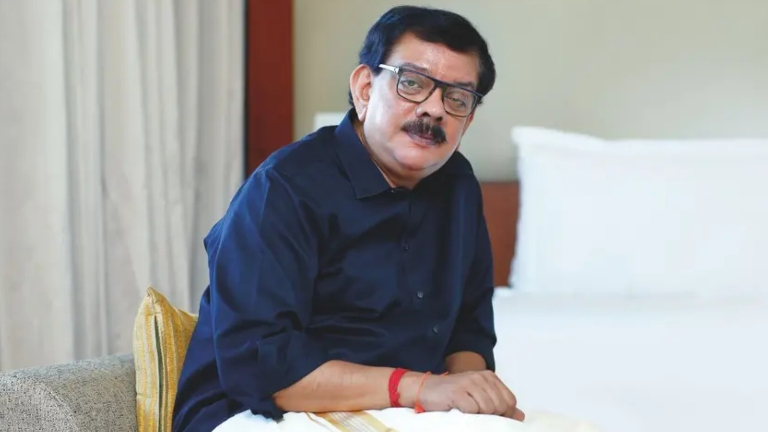
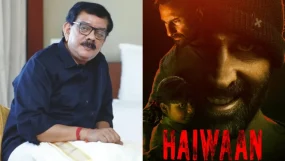
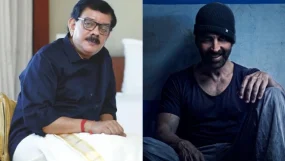
Filmmaker Priyadarshan is currently gearing up for his upcoming horror-comedy Bhooth Bangla, which reunites him with Akshay Kumar after 14 years. As excitement builds around the project, the director has opened up about the growing trend of sequels in Bollywood and why he personally avoids revisiting his own films with follow-ups.
Priyadarshan Reveals Why He Doesn’t Like Making Sequels Of His Films
In a conversation with Variety India, Priyadarshan explained that making sequels to his own films comes with pressure he would rather avoid. He said, “I don’t like to do sequels of my own films because I know how much I suffered to make the original.”
He said that while some sequels manage to build organically on the original story, many others rely only on the popularity of the first film. Drawing a comparison with a well-known Hollywood franchise, he said, “If you are taking films like Terminator 1, Terminator 2, you can see a continuity.” He added, “But in the other case, only the title matches, nothing else matches.”
Several Indian films, such as Love Aaj Kal, Don, Golmaal, and Dhamaal, have spawned sequels over the years, with some of them achieving considerable success at the box office. However, according to Priyadarshan, the popularity of the original film often gives sequels an initial boost.
Priyadarshan On Sequels: It Is An Extortion Of The First Film
He noted that the fame of the earlier instalment typically draws audiences to theatres during the first three to four days, after which the collections tend to decline. He continued, “The fame of the previous film also works in favour of the sequel for the first three to four days. Later, the collections start falling.” The director added that by the time the decline begins, the financial objective is often already met.
The filmmaker further criticised the trend of using established titles purely for commercial gain. “So then they are utilizing the fame of the previous film,” he said, explaining how the brand value of the original often helps the sequel perform initially at the box office. The filmmaker said, “By that time, the producer feels that I have made my money. So it’s a kind of exploitation. I rather say it’s a kind of extortion of the first film.”
According to Priyadarshan, such films tend to see a brief surge in collections before audiences lose interest. “Then what happens is the audiences are coming in for three or four days because of the aura of the first part, and the films are able to clock some collections. But after that, the films are dropping.”
Despite his criticism of the sequel trend, Priyadarshan remains one of the most influential filmmakers in Indian cinema, known for directing several iconic comedy films. With Bhooth Bangla, he is set to return to the big screen with a horror-comedy that brings back his collaboration with Akshay Kumar, a pairing that has delivered multiple memorable hits in the past.
About Bhooth Bangla
Directed by Priyadarshan, Bhooth Bangla is produced by Shobha Kapoor, Ektaa R Kapoor, and Akshay Kumar’s production house, Cape of Good Films. Produced by Ekta Kapoor’s Balaji Telefilms. What truly makes Bhooth Bangla a complete entertainer is its stellar ensemble cast. It features icons like Akshay Kumar, Tabu, Paresh Rawal, Rajpal Yadav, Jisshu Sengupta, Asrani, and Wamiqa Gabbi. Parts of the film have also been shot across Rajasthan, Jaipur, and Hyderabad, adding rich visual texture to the narrative.
For more news and updates from the entertainment world, stay tuned to Bollywood Bubble.
Also Read: Priyadarshan Clarifies His ‘Poor Education’ Remark On Rajpal Yadav Amid Rs 9 Cr Cheque Bounce Case; Says, “I Didn’t Mean To Insult Him”
Varsha Tiwari is a budding content writer passionate about Bollywood, pop culture, and the stories behind the spotlight. She enjoys breaking down trends, celebrity moments, and film narratives into engaging, reader-friendly content. Always curious and observant, she is currently pursuing a Master’s in Communication and Journalism. Outside of writing, she enjoys painting because storytelling doesn’t always need words to make an impact.
Related Posts
Homebound Turns 1! Revisiting Ishaan Khatter, Vishal Jethwa And Janhvi Kapoor’s Powerful Performances In Neeraj Ghaywan’s Film

Dil Chahta Hai, 3 Idiots To Mitrata, 5 Films That Beautifully Capture The Many Shades Of Friendship
Nani REACTS To The Paradise Reviews, Trolls; Tweets, “Learnt From The Flaws Pointed Out”
Mushtaq Khan Funeral: Welcome Actor Passes Away At 75 After Battle With Cancer; Son Shares Last Rites Details
Recent Post
- Anshula Kapoor-Rohan Thakkar Wedding Reception: Boney, Anil, Sanjay, Arjun, Janhvi, Shanaya Kapoor And More Bollywood Celebs Arrive In Style

- Devil Wears Prada 2 Screening: Karan Johar, Rhea Chakraborty, Tamannaah Bhatia, Pratibha Ranta And Others Turn The Red Carpet Into A Fashion Extravagance

- Kritika Kamra- Gaurav Kapur Reception: Malaika Arora, Vidya Balan, Richa Chadda And Many Celebs Attend The Newlyweds’ Star-Studded Celebration

- Ramesh Taurani Diwali Party 2025: Hrithik Roshan-Saba Azad, Riteish-Genelia Deshmukh, Sonakshi Sinha-Zaheer Iqbal And Other Bollywood Celebs Glam Up Ahead Of Festivities
- Manish Malhotra Diwali Party 2025: Nita Ambani, Radhika Merchant, Kareena Kapoor, Karan Johar And Other Bollywood Celebs Dazzle In Their Festive Finest

- The Ba***ds Of Bollywood Screening: Ranbir Kapoor-Alia Bhatt, Vicky Kaushal, Ambanis And Many More Celebs Step Out In Style To Support Aryan Khan’s Directorial Debut

- Son Of Sardaar 2 Screening: Mrunal Thakur, Ravi Kishan, Kubbra Sait, And Other Bollywood Celebs Attend Ajay Devgn’s Comedy Drama Premiere
- Metro…In Dino Screening: Aditya Roy Kapur, Sara Ali Khan, Anupam Kher, Neena Gupta And Other Bollywood Celebs Attend Anurag Basu’s Romantic Drama Premiere
- Naagin 6 Fame Simba Nagpal’s THESE Photos Prove He’s The Ultimate Adventure Junkie
- Met Gala 2025 Worst Dressed: ‘Basic’ Hailey Bieber To ‘Barbie’ Shakira And ‘Witchy’ Sadie Sink, 12 Celebs Who Pissed The Fashion Police


Read More
Follow us
© 2026. All rights are reserved with DeepDive Digital Pvt Ltd