
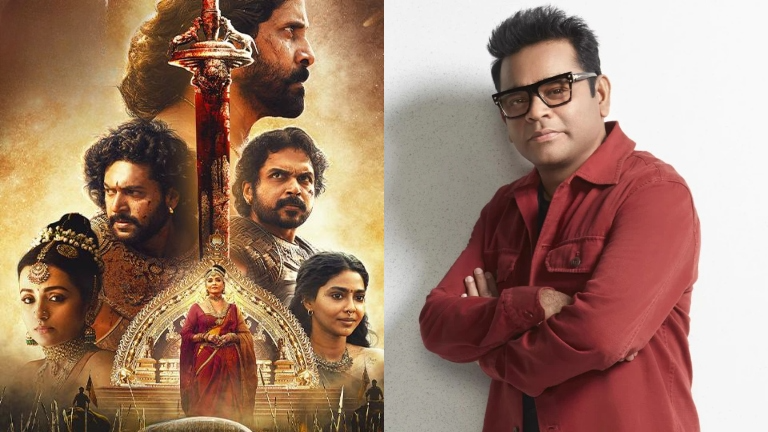
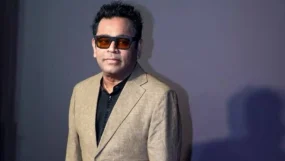
Delhi High Court’s Justice Pratibha M Singh directed AR Rahman and the production company Madras Talkies to correct the song credits for Veera Raja Veera in the movie Ponniyin Selvan 2. This follows a copyright infringement suit filed by Ustad Faiyaz Wasifuddin Dagar. He is a distinguished classical singer who claimed that the composition of Veera Raja Veera was essentially identical to Shiva Stuti. It was created by Dagar’s father and uncle, with only minor changes.
Delhi High Court Asks AR Rahman To Deposit Rs 2 Crore For Copyright Infringement
On Friday, the Delhi High Court issued an interim order mandating that AR Rahman and Madras Talkies acknowledge the junior Dagar brothers—Nasir Zahiruddin and Nasir Faiyazuddin—in the song credits, noting that the piece was previously credited to the Dagarvani tradition. Additionally, the court required Rahman and the production company to deposit Rs 2 crore with the court’s registry and pay Rs 2 lakh in costs to the Dagars.
“The court holds that the impugned song is not merely based on or inspired by the song composition of Shiva Stuti but is exact identical to the song composition with mere changes,” Justice Singh stated while delivering the verdict. The court pointed out that initially, the defendants (Rahman and the company) did not recognise Dagar’s work. “When the plaintiff (Dagar) contacted defendant number 1, the acknowledgement was given albeit reluctantly,” the bench remarked.\
High Court Announces New Credit Slide Implementation
The high court also stipulated that a new credit slide would be implemented across all OTT and online platforms for the contested song. It stated, “In place of the existing slide, a new slide will be made on all OTTs and online platforms in respect of the impugned song affecting the credits.” The new slide will read, composition based on Shiva Stuti by late Ustad N Faiyazuddin Dagar and late Ustad Zahiruddin Dagar. A detailed copy of the judgment will be provided later.
Justice Singh emphasised that Hindustani classical music is eligible for protection under the Copyright Act, as long as it represents the composer’s original work. “So long as the composition in the Hindustani classical music is an original work of the composer, the same would be entitled to protection under the Copyright Act. The composer would also be entitled to exercise all rights under the rights,” the court ruled.
About The Lawsuit
In his suit, Faiyaz Wasifuddin Dagar, a Padma Shri awardee, claimed that the composition of Veera Raja Veera was derived from Shiva Stuti. It was created by his father, Nasir Faiyazuddin Dagar and uncle Zahiruddin Dagar. He argued that despite the different lyrics, the song’s musical structure, rhythm, and beat bore a striking resemblance to the original Shiva Stuti composition. And that it was being used without appropriate attribution.
Also Read: AR Rahman’s The Wonderment Tour: Sukhwinder Singh, Neeti Mohan And Jonita Gandhi Join The Music Maestro For Global Premiere In Mumbai

Akankshya Mukherjee is a dynamic and ambitious individual poised to make waves in the realm of Media and Communication. With a passion for creativity and a drive to contribute to forward-thinking organizations, Akankshya embodies adaptability and a hunger for learning. Having already garnered experience through involvement in various organizations, she has honed the skill of quickly adapting to new environments and challenges. She sees each opportunity as a chance for personal and professional growth, eagerly embracing roles in communications and content writing.
Related Posts
Vijay Varma Reflects Idea Of Success In Bollywood, Recalls Struggles As A Newcomer; Says, “You See Shah Rukh Khan On Page 1”
Dhurandhar The Revenge: ‘Aalam’ Gaurav Gera Calls Director Aditya Dhar A ‘Chill’ Man; Says, “This Man Is So Evolved”
Shaheen Bhatt Gets Engaged To Longtime Boyfriend Ishaan Mehra; Alia Bhatt Reacts To Adorable Post
Patralekhaa SLAMS Trolls Over Body-Shaming, Weight Gain After Pregnancy; Says, “I Haven’t Eaten A Mountain”
Recent Post
- Kritika Kamra- Gaurav Kapur Reception: Malaika Arora, Vidya Balan, Richa Chadda And Many Celebs Attend The Newlyweds’ Star-Studded Celebration
- Ramesh Taurani Diwali Party 2025: Hrithik Roshan-Saba Azad, Riteish-Genelia Deshmukh, Sonakshi Sinha-Zaheer Iqbal And Other Bollywood Celebs Glam Up Ahead Of Festivities
- Manish Malhotra Diwali Party 2025: Nita Ambani, Radhika Merchant, Kareena Kapoor, Karan Johar And Other Bollywood Celebs Dazzle In Their Festive Finest
- The Ba***ds Of Bollywood Screening: Ranbir Kapoor-Alia Bhatt, Vicky Kaushal, Ambanis And Many More Celebs Step Out In Style To Support Aryan Khan’s Directorial Debut

- Son Of Sardaar 2 Screening: Mrunal Thakur, Ravi Kishan, Kubbra Sait, And Other Bollywood Celebs Attend Ajay Devgn’s Comedy Drama Premiere
- Metro…In Dino Screening: Aditya Roy Kapur, Sara Ali Khan, Anupam Kher, Neena Gupta And Other Bollywood Celebs Attend Anurag Basu’s Romantic Drama Premiere
- Naagin 6 Fame Simba Nagpal’s THESE Photos Prove He’s The Ultimate Adventure Junkie
- Met Gala 2025 Worst Dressed: ‘Basic’ Hailey Bieber To ‘Barbie’ Shakira And ‘Witchy’ Sadie Sink, 12 Celebs Who Pissed The Fashion Police
- Met Gala 2025 Best Dressed: Pregnant Rihanna To Princey Diljit Dosanjh And Mesmerizing Jodie Turner-Smith, 12 Celebs Who Wowed Us With Their Fashion
- Phule Special Screening: Javed Akhtar, Rajkummar Rao, Huma Qureshi And Other Celebs Arrive To Support Pratik Gandhi, Patralekhaa-Led Biopic

Read More
Follow us
© 2026. All rights are reserved with DeepDive Digital Pvt Ltd